
Root Washing
A Step-by-Step Guide For Indoor Plant Care

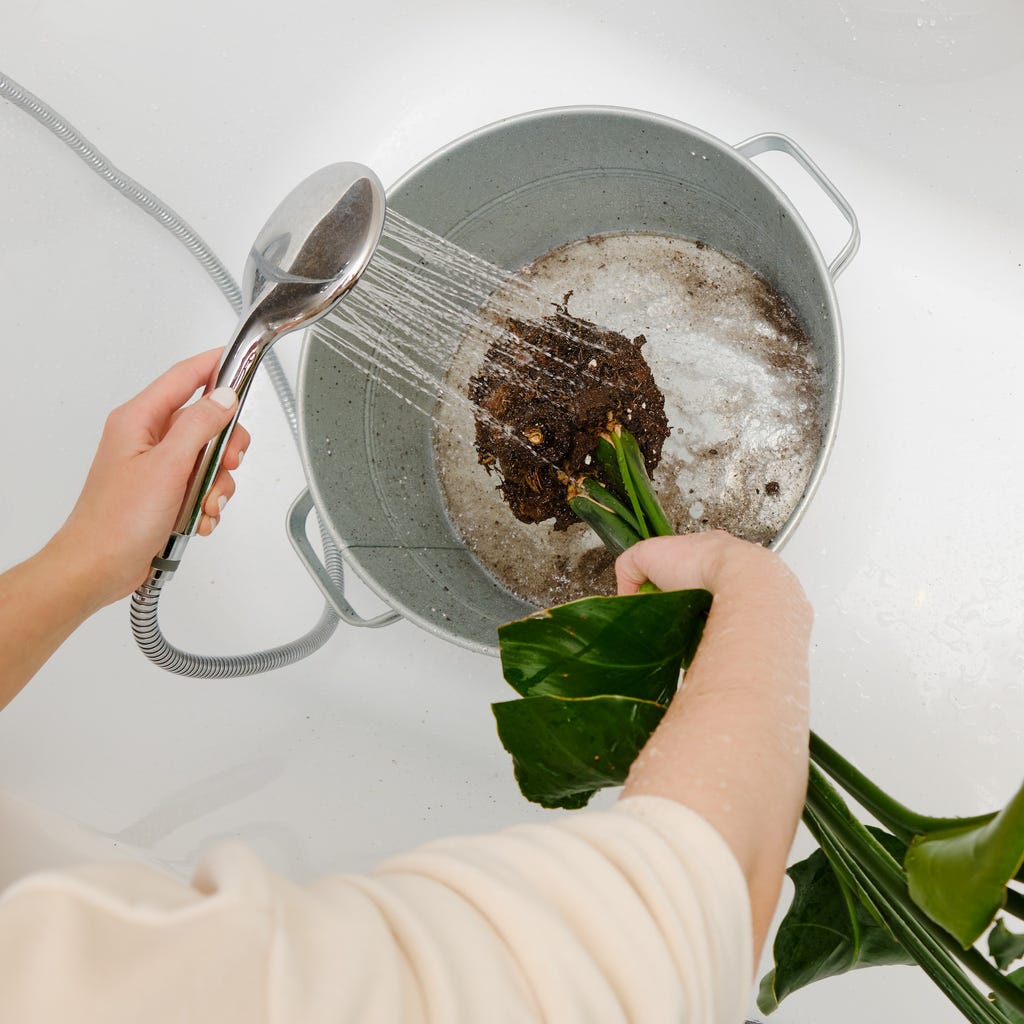
Root-washing container plants is an essential technique for maintaining healthy plants. This process involves gently removing the soil or growing medium from a plant's roots to inspect, trim, and rejuvenate the root system. Root washing is particularly beneficial for container-grown plants as it helps prevent root-bound plants and enhances their overall health. Here's a step-by-step guide on how to root wash container plants, how often to do it, and the benefits of the process:
Why Root Washing is Beneficial:
Prevents Root Binding: As plants grow in containers, their roots can become tangled and root-bound, inhibiting proper nutrient and water absorption. Root washing prevents this issue by untangling and trimming the roots.
Stimulates New Growth: Root washing encourages the growth of new, healthy roots, which can improve the plant's ability to absorb water and nutrients, promoting overall growth and vitality.
Enhanced Drainage: It helps improve the drainage capacity of the potting mix, reducing the risk of waterlogged soil and root rot.
Detects Issues: During root washing, you can examine the roots for any signs of disease, pests, or root rot. Early detection and treatment are crucial for the plant's health.
Revives Pot-Bound Plants: For plants that have outgrown their containers, root washing allows you to repot them into larger containers or divide them, ensuring they have enough space to thrive.
Keep reading with a 7-day free trial
Subscribe to Your Homestead Gardener to keep reading this post and get 7 days of free access to the full post archives.